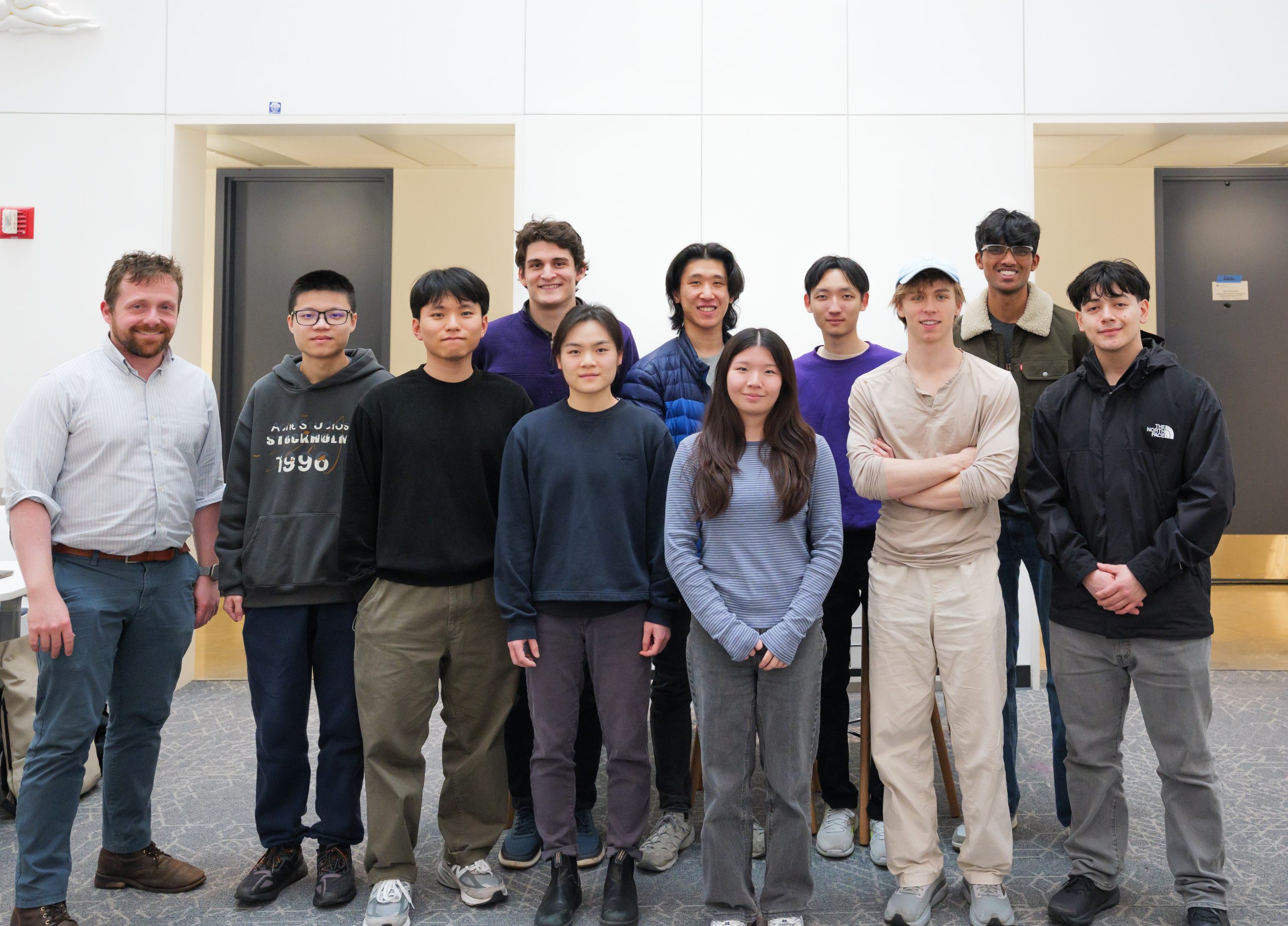
Our lab builds quantum hardware for computing, sensing, and communication by combining atomic physics with optical and electrical engineering. In practice, that means shining lasers and microwaves at atoms and atom-like defects in crystals precisely enough to use them as qubits. We work on platforms controlled with light, which is the engineering expertise this lab is built around: we design, model, and build our own optical systems, including the interferometers we use to characterize them, drawing on years of optical systems architecture in industry. And both platforms are mature enough to expose the problems that actually stand between us and useful machines.
Neutral atoms are the most promising route to large numbers of high-quality qubits, and the hard part is control: every qubit has to be reached programmably with electromagnetic waves, and isolated otherwise. We’re asking how error correction, physical geometry, and optical control fit together — whether the right arrangement of atoms and beams buys a genuine architectural advantage on the road to fault tolerance.
Nuclear spins near color centers in host crystals hold quantum information longer than anything else we know of in the solid state, which makes them a natural quantum hard drive. Today the field can hold roughly a dozen such qubits coherent for seconds. We’re developing optical and radiofrequency control to push this capability by orders of magnitude, working closely with Kai-Mei Fu’s Quantum Defect Lab on a testbed we have established in the QT3 Lab.
We build hardware for teaching, too. This field needs people who have actually aligned a beam path, chased down a noise source, and trapped particles, so we design instructional experiments around real quantum hardware and publish them.
We aim in general to publish what works and what doesn’t, document our infrastructure so the next group builds on it rather than around it, and stay honest about what we don’t know, because that is usually where advances lie. Curiosity is the engine here. If something in this work makes you want to know the answer — in whatever part of your education journey you find yourself — come join us.

Located in the Paul Allen Center at the University of Washington.
Interested in working with us?