
Low-Earth-orbit (LEO) satellite constellations are playing an increasingly important role in non-terrestrial networks. They create new opportunities for extending connectivity, but also introduce unique challenges in reliable satellite downlink observation, including low received signal power, short visibility windows, and large, time-varying Doppler shift.
This project has established a low-cost, SDR-based satellite downlink testbed for receiving, tracking, and analyzing Ku-band signals from LEO satellites. The system consists of an LNB-based RF capturing hardware (Fig. 2) and acquisition/processing software for continous measurement of LEO satellite downlink activity. Satellite identification is performed by matching time-frequency representations of the measured signals against TLE-predicted Doppler S-curves. Building on this foundation, ongoing work focuses on development of real-time algorithms for satellite identification, beam tracking, and beamforming.
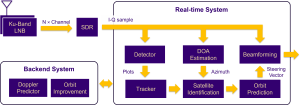
Figure 1. System Block Diagram
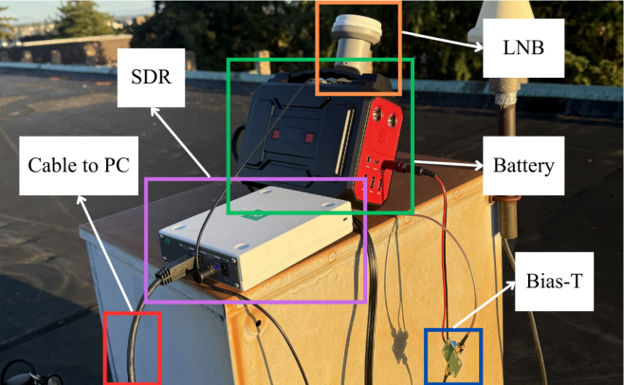
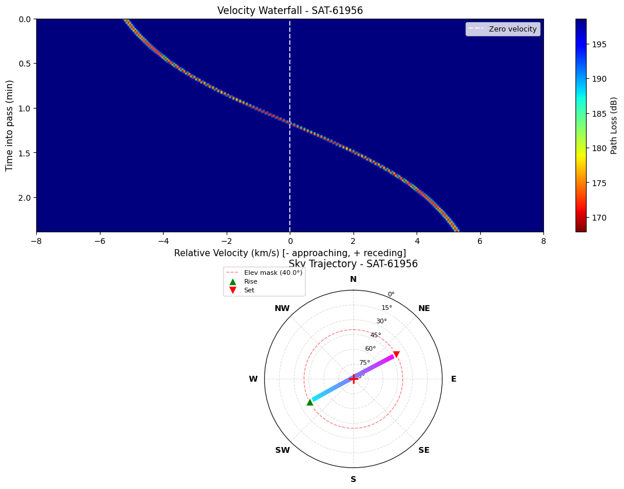
Figure 2. Monitoring System Hardware Setup Figure 3. TLE-Based Doppler S-Curve Predictor
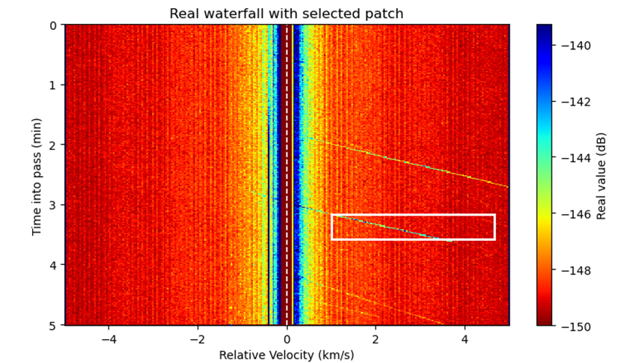
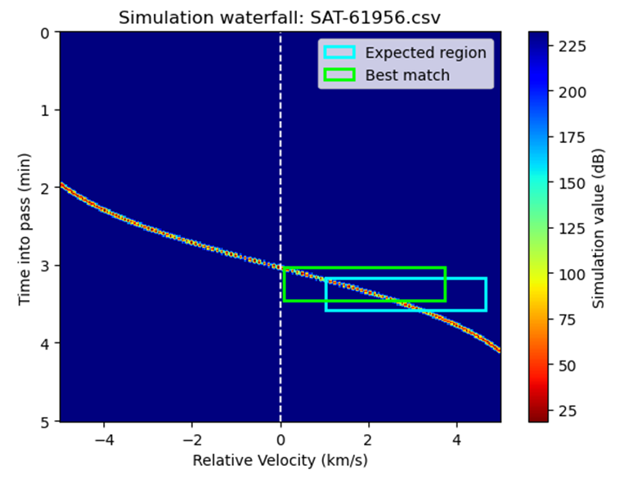
Figure 4. Measured Waterfall Spectrogram Figure 5. Satellite Identification via Doppler S-Curve Matching