
A University of Washington subproject of NSF VINES Track 2: OMNISCIENT.
Digital-twin simulation for aerial networks
ns-3-UAV focuses on simulation for the University of Washington’s digital-twin orchestration effort within OMNISCIENT. The research aims to connect UAV motion, radio propagation, and network behavior to evaluate how aerial-network configurations support communication and mission requirements.
OMNISCIENT aims to develop a self-configuring, multi-hop UAV network using integrated access and backhaul (IAB). UW leads the design and testing of the AI-enabled digital-twin orchestrator, working with Georgia Tech. The planned orchestrator uses real-time UAV inputs to evaluate changes in UAV positions, IAB resource allocation, and routing, with reinforcement learning and graph neural networks as components of the research direction.
Simulation framework
The UAV effort builds on the simulation direction of ns-3-NTN, a framework based on ns-3 and 5G-LENA. Its goal is to bring flight trajectories, site-specific propagation, and protocol-level communication performance into a common environment for studying aerial networks before field testing.
This page describes the UAV research direction. Implemented scenarios, software releases, and demonstrations will be documented as they become available.
Earlier experimental and simulation work
The 2025 UW–T-Mobile capstone project, Adaptive Drone Flight Using Real-Time 5G RF Data, investigated cellular connectivity during drone flights and used propagation simulation to study flight planning. The capstone poster documents this earlier experimental and modeling work, which predates the OMNISCIENT project.
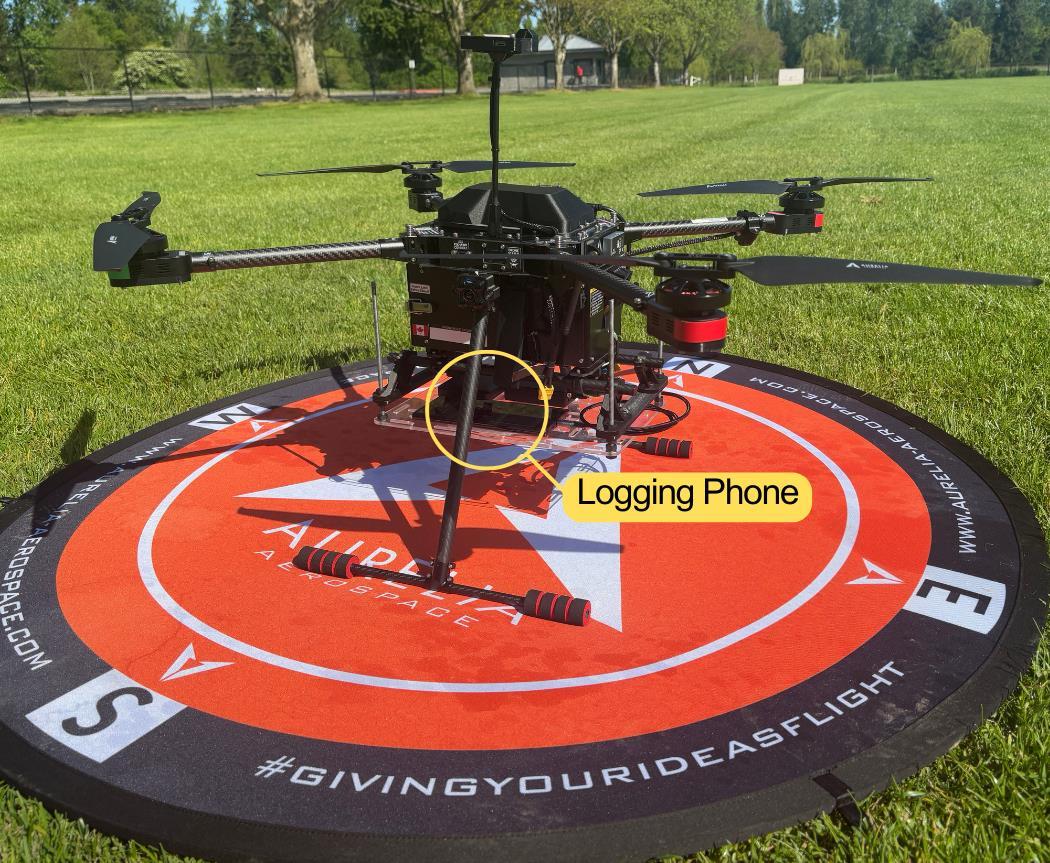
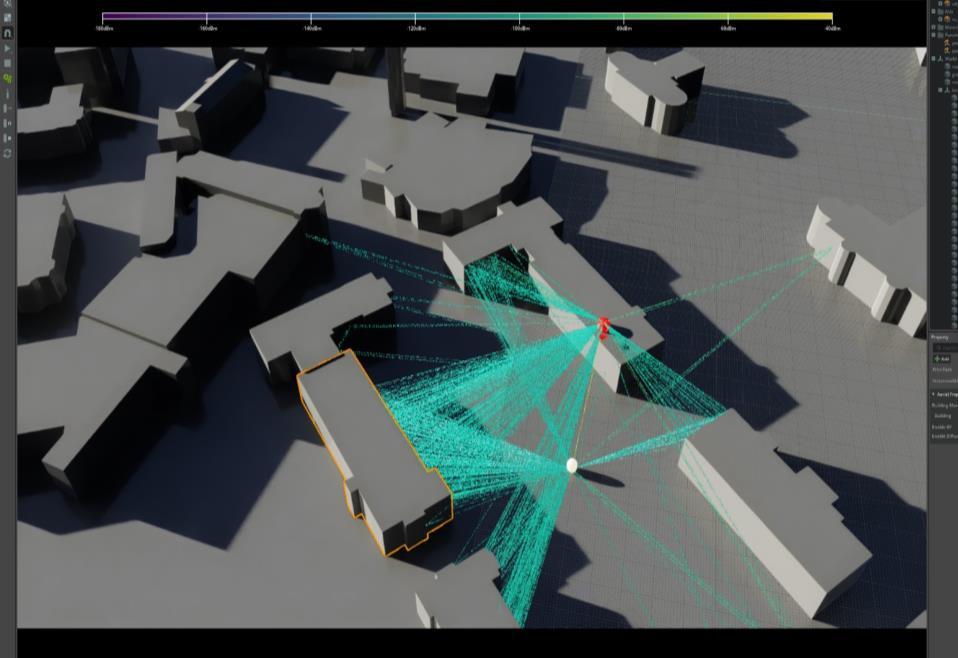
Image source: 2025 UW ECE ENGINE / T-Mobile capstone team.
Read the 2025 capstone poster.